
How to Check Criminal History in Lincoln
Begin a Lincoln criminal record check with the record’s creator. Lincoln police can address a Lincoln incident or arrest report. The Benton jail covers custody and booking. Case.net and the Circuit Clerk cover a charge after it is filed. MACHS adds the Missouri repository layer, but a name result remains a possible match rather than fingerprint proof of identity.
- Call Lincoln City Hall or Police at 660-547-2718 for a city-created incident or arrest report.
- Supply the event date and place, parties, incident number if known, record type, and desired format.
- Search Case.net for the Lincoln municipal or criminal court file, then ask the Benton Circuit Clerk to confirm it.
- Use the Benton jail roster and detention line for booking or current-custody questions.
- Use MACHS for statewide open-record history and the fingerprint channel for identity-confirmed self-review.
No one search covers all five steps. A Lincoln report may exist before any court case. A booking can appear while charges are still under review. A court disposition can remain available after a short jail list no longer shows the event. Keep each identifier and compare dates, agency names, charges, and dispositions before deciding that two entries refer to the same event.
Lincoln Police Records Entry Point
Lincoln’s official City and Police contact is 122 W Main, Lincoln, MO 65338, telephone 660-547-2718. Lincoln does not publish a dedicated police-report form, record fee, records email, arrest blotter, search portal, or holding-facility page. City Hall therefore serves as the practical first contact for a Lincoln-created report. Call before visiting to confirm office hours, staff availability, copy costs, acceptable request delivery, identification, and redaction expectations.
The official Lincoln general information page presents the Lincoln city and police contact used for this local route.

That contact page is not a Lincoln criminal records database. A request that states the kind of report sought and gives a narrow event description is more useful than a broad demand for every record connected with a name.
The Lincoln Police Department
Lincoln Police holds the incident and arrest narratives created by its officers. Those reports can include the Lincoln agency’s initial facts and response, while a later court docket records only charges that were actually filed. The two sources may use different descriptions without either one being false. An allegation at the scene can be amended, narrowed, or declined before it becomes a court count.
Lincoln publishes no mandatory request-field list. Helpful details include requester contact information, the event date and location, an incident number, people involved, the precise record sought, and a preferred format. These are locating aids, not claimed Lincoln rules. Ask staff what fee, proof of identity, or redaction process applies before sending a request. Protected victim information, active investigative material, juvenile records, and other closed data may not be released.
Lincoln Police Records and Chapter 200
Chapter 200 of Lincoln’s city code creates the police department and provides its municipal authority. The code establishes that a Lincoln police structure exists, but it does not list current arrests, incident reports, officers’ narratives, or case outcomes. Treating the code as a search portal is a common local mistake.
The distinction is simple. Use the code to understand the Lincoln department’s legal role. Use City Hall or Police to request a Lincoln report. Use Case.net for a filed judicial case, and use detention for a county booking. This division also helps when a municipal event appears in the statewide court system. Statewide display does not make Lincoln’s underlying incident narrative a court-clerk record.
Chapter 200 also cannot answer whether Lincoln Police responded to one address, whether an officer made an arrest, or whether a prosecutor later filed a charge. Those facts require the Lincoln report and the matching court or booking source. If a person finds only a code provision, the next useful move is to call Lincoln with the event details, not to treat the provision as proof about a specific case. That small distinction keeps legal authority separate from an individual record.
Arrests and Bookings in Lincoln
Official Lincoln pages do not identify a Lincoln jail or Lincoln booking roster. A person taken into custody in Benton County is transported to the Benton County Detention Facility. Lincoln Police remains custodian of its officer-created report, while detention creates the booking number, intake record, photograph, listed charges, arresting-agency field, and provisional bond data.
Search the county roster’s Current view first, then its recent Released view. A profile can help identify the arresting agency and booking date, but the Sheriff warns that the web roster is convenience information that cannot be certified for accuracy or authenticity. Call detention at 660-438-6135 for live status, current bond, correct charges, and a case number. An arrest or booking is an accusation stage, not proof of guilt.
Lincoln Arrest Records Without a Blotter
The absence of a Lincoln arrest blotter means a search needs a fallback chain. Ask Lincoln for its report, check county booking, and look for a filed court case. A blank result at one stage cannot establish that no event occurred. Short publication windows, filing delays, name variants, protected records, and agency boundaries all affect what appears.
The governing local report rule is explained in RSMo §610.100, the official Missouri statute for arrest, incident, and investigative-report access.
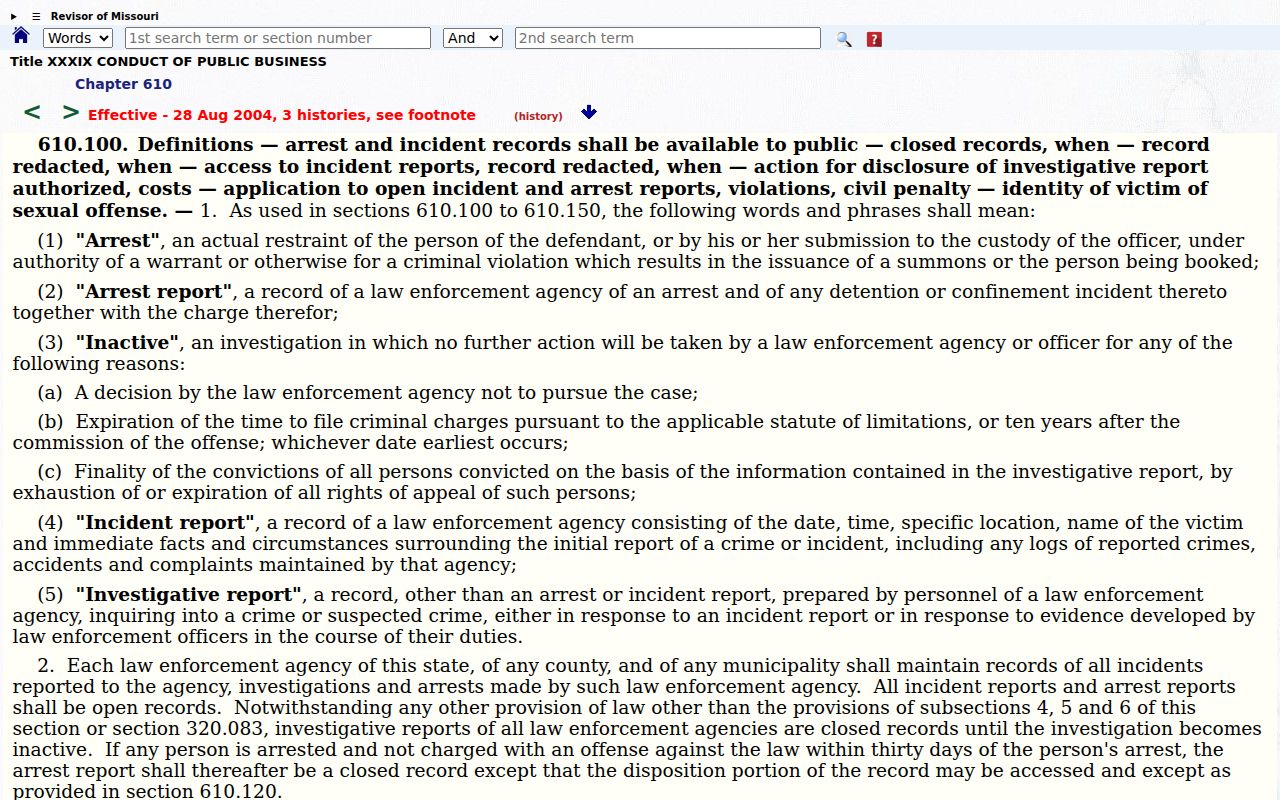
The statute generally opens Lincoln arrest and incident reports while permitting active investigative reports and protected details to remain closed. If no charge is filed, an arrest report ordinarily closes after thirty days, subject to the law’s exceptions and disposition provisions.
Lincoln Municipal Court Records
For filed Lincoln municipal charges, search Missouri Case.net and select the Benton court location for Lincoln. If a case number is known, an exact-number search is the most precise route. A name search is useful when it is not. The Circuit Clerk at 316 Van Buren in Warsaw, telephone 660-438-7712, can address certified copies, missing images, older material, sealed-status questions, and confirmation that a web result is the intended file.
| Court Name | Lincoln municipal matters accessed through Benton County’s 27th Judicial Circuit channels |
|---|---|
| Case Types Heard | City ordinance and municipal matters within the court’s lawful jurisdiction |
| Case Lookup Channel | Missouri Case.net and the Benton County Circuit Clerk |
| What the Docket Shows | Case header, parties, filed counts, docket events, hearings, disposition, judgment, and public documents when available |
| Copies & Fees | Ask the Circuit Clerk; current Benton copy and certification charges were not published |
A Lincoln municipal docket is not the Lincoln police report. It begins with the judicial filing and tracks the court’s action. If the docket shows an unfamiliar term such as SIS, that means imposition of sentence was suspended. SES means a sentence was imposed but its execution was suspended. The clerk can confirm the official entry.
Lincoln Court Records Reach Warsaw
Lincoln residents face a real two-city record route. The Lincoln police contact is in Lincoln, while the Benton courthouse and detention facility are in Warsaw. Distance does not change custody. Request the report from the Lincoln office that created it, then use Warsaw-based county offices for booking and court records. Sending a Lincoln police narrative request to the Circuit Clerk will not make the clerk its custodian.
If a filed state charge raises defense questions, the official Missouri State Public Defender application page explains the application route for the office serving the county where the case is pending.
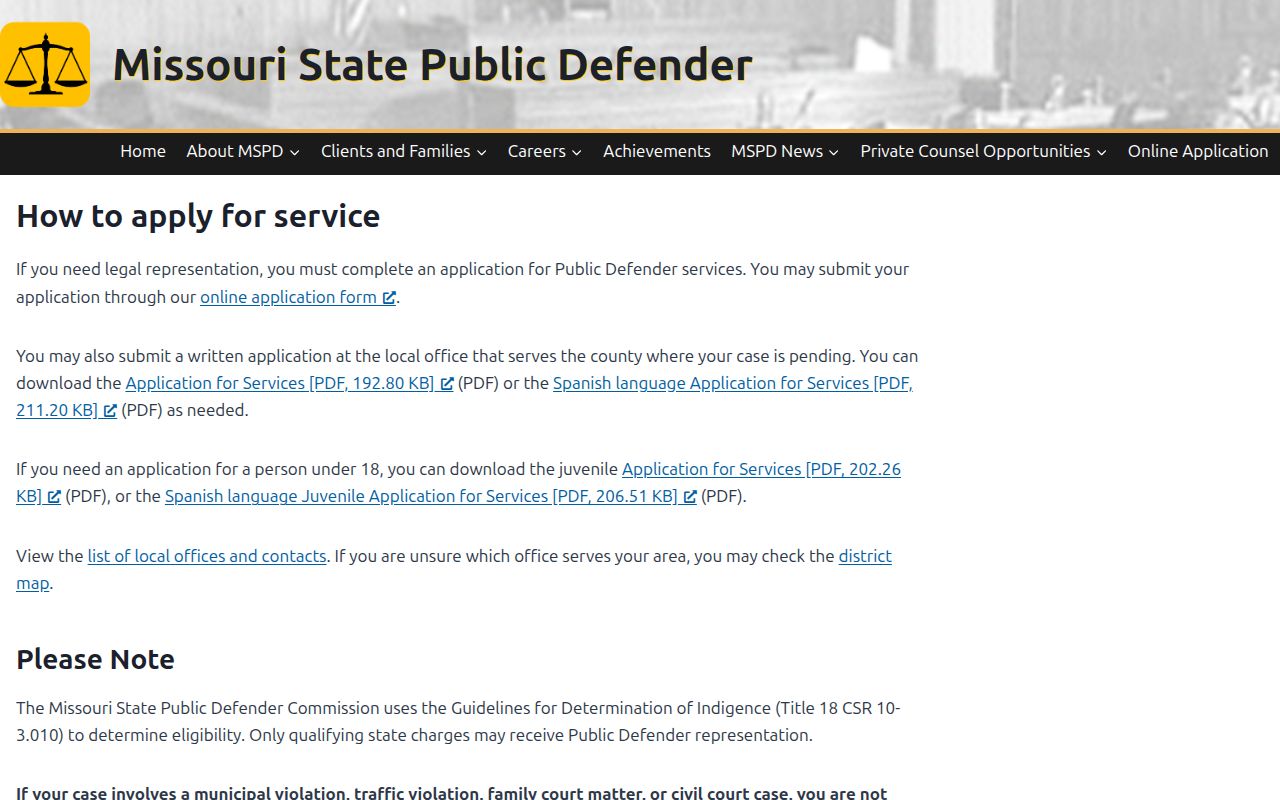
The defender system handles qualifying state charges, not ordinary municipal, traffic, civil, or family matters. The Lincoln court docket and clerk remain the official sources for public case status regardless of whether counsel is appointed.
Where Lincoln Records End Up
Lincoln Police creates the Lincoln report. Benton detention creates a booking if custody occurs. Prosecutors report charges they actually file, court clerks report dispositions, and corrections officials report custody or supervision events. Missouri law directs specified justice agencies to contribute reportable information without undue delay.
The official central-repository reporting statute sets the contribution duties behind that flow.
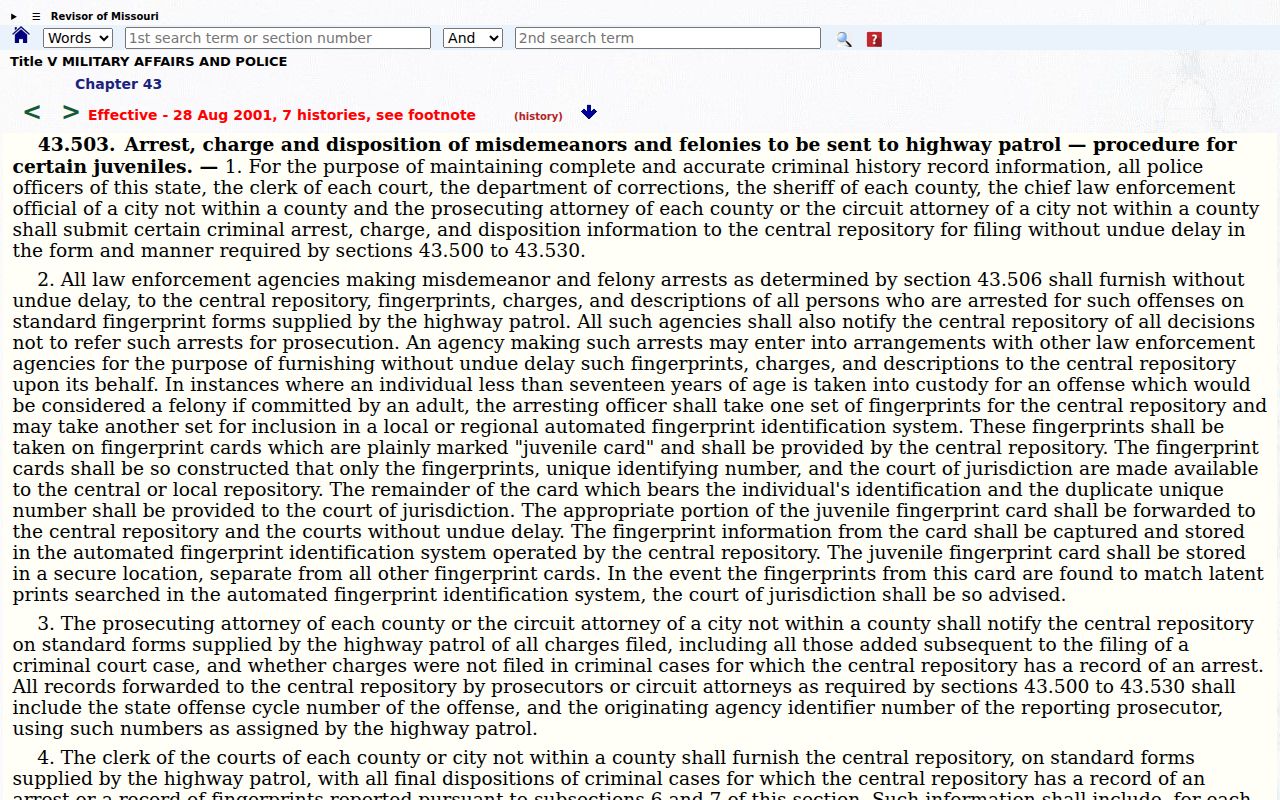
Record flow: Lincoln PD › Benton County Courts › Missouri State Highway Patrol, Criminal Justice Information Services Division Central Repository
A record can lag between stages. The roster can lead the court docket, and a court disposition can arrive at the repository after it is entered locally. Compare the Lincoln report, booking record, and court outcome when reviewing an event. Each custodian corrects its own part of the chain.
Lincoln Justice Records Milestone
Lincoln appears in Benton County’s preserved jail-planning history. The county’s archived New Jail Information page records a public project meeting at Lincoln High School during the 2017 and 2018 discussion. The archive also retains conceptual design material and Jail Committee minutes. It documents public participation in county justice planning, but it is not proof that every proposed feature became part of the operating detention facility.
This Lincoln milestone is useful for historical research because it connects Lincoln to a dated county record set outside modern arrest and case portals. Current custody questions still go to the active detention facility and roster. Researchers studying the planning process should use the archived county page and minutes, keep the publication context, and avoid presenting a conceptual plan as a current building description.
The Lincoln meeting notice also shows why record type matters in historical work. A public-meeting notice describes when and where the county sought public input in Lincoln. Committee minutes record the planning discussion. Neither source is a Lincoln arrest log, jail roster, or court docket. Labeling each item by its actual purpose preserves its value and prevents old planning material from being mistaken for a current custody record.
Lincoln Criminal Record Identity Checks
When a Lincoln name search produces an uncertain match, statewide identity tools provide a narrow fallback. MACHS name checks require an account, first and last name, plus date of birth or Social Security number. They return open Missouri repository history and are described as possible matches. The official MACHS search-requirements page explains those identifiers.
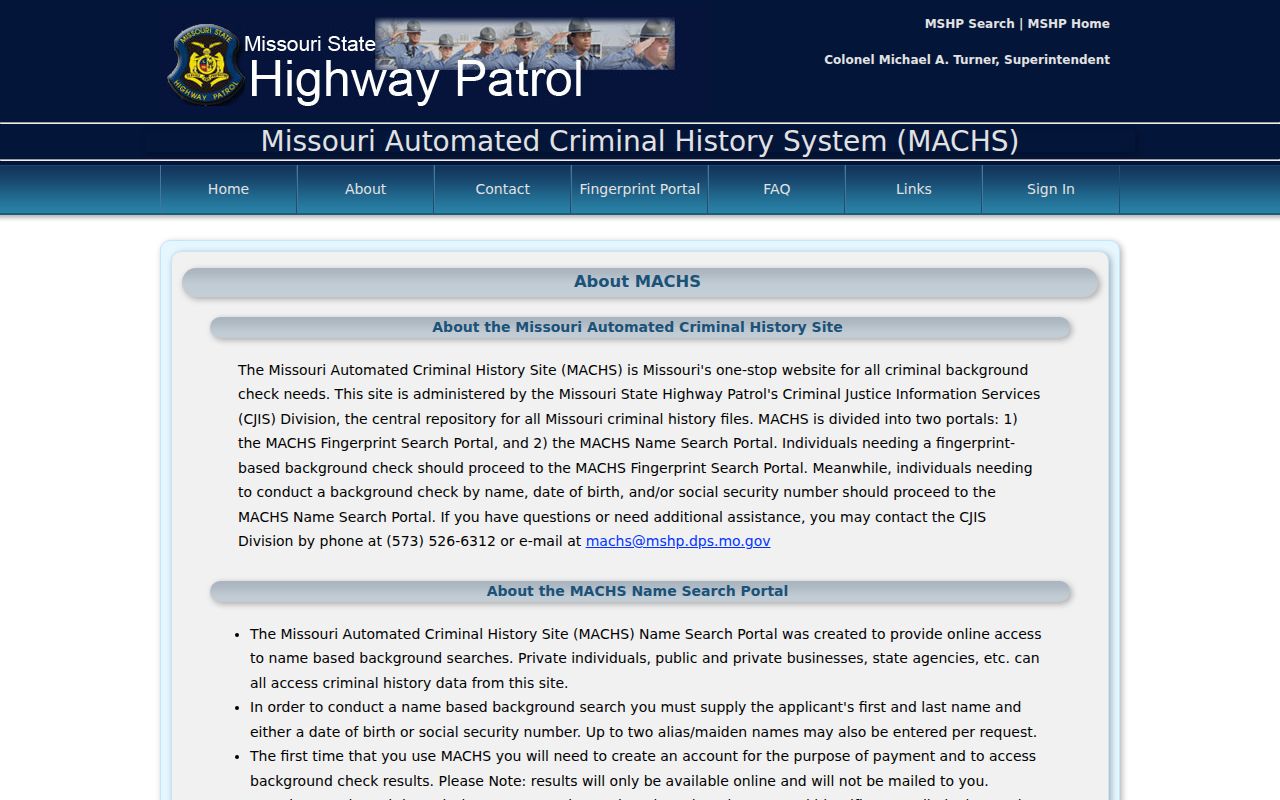
That statewide response does not replace the Lincoln report or Lincoln court file held in Benton County. For identity-confirmed self-review, register through the MACHS fingerprint channel and use the live location search because no permanent Benton County IDEMIA site was verified. Fingerprints strengthen identity matching, but they do not make closed data public.
Public Access Rules
Lincoln report access rests on Missouri Sunshine Law, while Lincoln court access follows Missouri Court Operating Rule 2. Public access has limits. Active investigations, juvenile matters, victim and safety data, sealed warrants, protected identifiers, and expunged records can be withheld or redacted. Case.net is a useful remote view of Lincoln matters, but not every official-file component is available online.
Key Statutes:
RSMo §610.100 defines Lincoln arrest and incident reports and the main rules for open and active investigative material.
RSMo §43.503 establishes Lincoln justice-agency reporting duties to the central repository.
RSMo §43.506 identifies reportable Lincoln offenses and excludes several low-level categories.
Ask Lincoln for Lincoln-created reports. Ask the jail for official Lincoln booking material and current custody confirmation. Ask the Circuit Clerk for the Lincoln court file. A lawful closure or redaction is an access boundary, not an invitation to fill the gap from an unofficial source.